Have you ever opened a message, seen a post, or noticed a warning that says NSFW and wondered what it means? This abbreviation appears across social media, messaging platforms, websites, and online communities. Understanding it can help you avoid awkward situations and make better decisions about what you open or share.
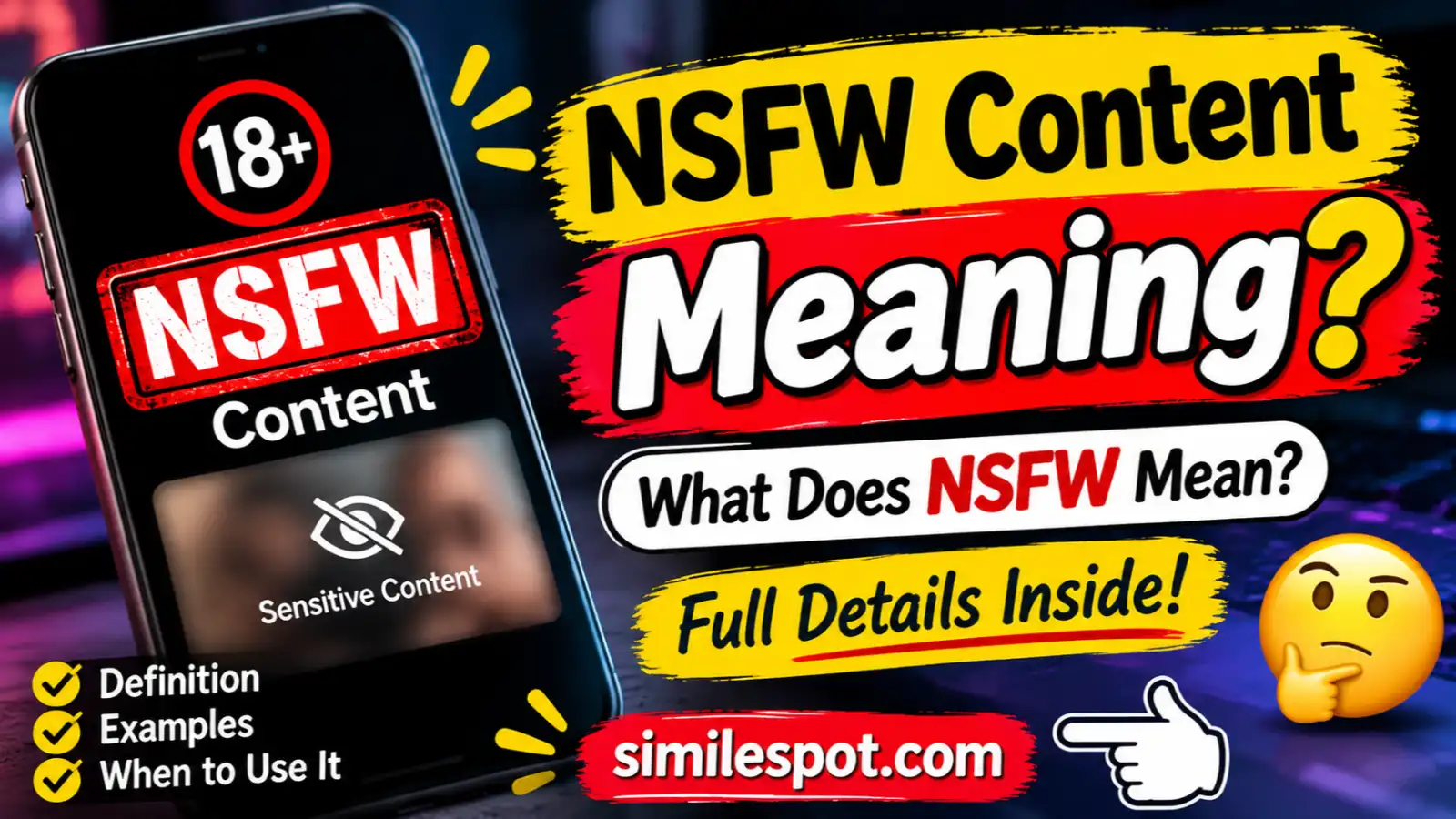
The NSFW content meaning is Not Safe for Work. It is a warning label used for online material that may be unsuitable to view in a workplace, school, public place, or other shared environment. The content might include adult themes, strong language, disturbing images, or other material that people may not want to see in public.
For example, someone might add an NSFW warning before sharing a post that contains mature humor or an intense scene. The label gives readers a chance to decide whether they want to view the material.
Importantly, NSFW does not describe one specific type of content. Its meaning depends on the material, the platform, and the audience. It is a caution rather than a complete description of what someone will see.
In this guide, you will learn what NSFW stands for, where the expression came from, how people use it online, and how it differs from similar labels such as SFW and NSFL. You will also discover how to recognize content warnings and use them responsibly. 📱
1. What Is the NSFW Content Meaning?
NSFW stands for Not Safe for Work. People use it as a warning when online content may be inappropriate or uncomfortable to view in a professional or public setting.
The phrase originally focused on workplace situations. However, people now use it more broadly to describe material that may not be suitable for schools, libraries, public transport, family settings, or other shared spaces.
In simple English:
NSFW means that content may be unsuitable to open or view in a public or professional environment.
The label helps people understand that they should consider their surroundings before viewing something.
What Can NSFW Describe?
An NSFW label can appear before different kinds of material, including:
- Content with mature themes.
- Strong or offensive language.
- Disturbing or unsettling imagery.
- Graphic discussions of injuries or accidents.
- Adult-oriented jokes or discussions.
- Material that may be inappropriate for a professional setting.
The label does not automatically mean that the content is illegal, harmful, or explicit. It simply warns that the material may not be appropriate for every audience or environment.
A Simple Example
Imagine that a friend sends you a message:
“There’s a surprising scene in this video. NSFW!”
The warning tells you that the video may not be suitable to open while sitting in a classroom, office, or public place.
You can then decide whether the content is appropriate for your situation.
Quick Definition Table
| Term | Meaning |
|---|---|
| NSFW | Not Safe for Work |
| Full form | Not Safe for Work |
| Main purpose | Warns viewers about potentially unsuitable content |
| Common locations | Social media, forums, messages, and websites |
| Content type | Varies depending on the post |
| Main benefit | Helps people make informed viewing decisions |
Remember: NSFW is a warning label, not a guarantee about exactly what a post contains.
2. What Does NSFW Stand For?
The full form of NSFW is Not Safe for Work.
Each word contributes to the meaning:
- Not: Indicates that something may be unsuitable.
- Safe: Refers to whether viewing the material is appropriate in a particular setting.
- For: Connects the warning to the intended environment.
- Work: Originally refers to a professional workplace.
Together, the words create a short warning that tells people to think before opening a particular piece of content.
Why Does the Full Form Matter?
The full form explains why the abbreviation is so common in professional communication and online discussions.
People often check messages while working, studying, or spending time in public. An unexpected image, loud clip, or mature discussion may create an uncomfortable situation.
The NSFW label gives viewers a little information before they open the material.
For example:
Without a warning:
“Check out this video!”
With a warning:
“NSFW warning: This video contains mature themes.”
The second message gives the recipient more information and lets them choose an appropriate time and place.
Does NSFW Always Mean Adult Content?
No. This is one of the most common misunderstandings.
NSFW can refer to adult-oriented material, but it may also describe strong language, disturbing subjects, or other content that a workplace or public environment may not be suitable for.
The exact meaning depends on context.
For instance, a post about a serious accident might receive an NSFW label because its imagery could be upsetting. A comedy post might receive the same label because it includes inappropriate language.
Therefore, do not assume that every NSFW warning refers to the same type of material.
3. Origin and History of the NSFW Abbreviation
NSFW developed as a practical internet abbreviation for warning people about content that might be unsuitable to view at work.
As online communication became more common, people began sharing links, images, videos, and discussions through email, forums, and social platforms. Not every post was appropriate for a professional environment.
A short warning was useful because it allowed the sender to communicate a potential concern without writing a long explanation.
Early Online Communication
Internet forums and email communities helped popularize short labels and abbreviations. Users needed quick ways to describe posts, identify topics, and help readers understand what to expect.
NSFW became one of the expressions used for this purpose.
It was especially useful when someone shared material that a reader might not want to open while sitting at work or using a shared computer.
Growth Through Online Communities
As discussion forums and social networks grew, the abbreviation spread beyond workplace-related conversations.
People began using NSFW warnings in:
- Online discussion boards.
- Email messages.
- Community posts.
- Social media captions.
- Chat groups.
- Shared links and media descriptions.
The expression became familiar to many internet users because it solved a simple communication problem: warning someone before they viewed potentially unsuitable material.
How Its Meaning Expanded
Today, NSFW is not limited to office environments.
A student might use it when warning a friend about a post that is unsuitable for a school setting. Someone browsing on public transport might avoid opening a link marked NSFW. A social media user might apply the label to material that could be uncomfortable in a family environment.
The original phrase remains the same, but its everyday use has become broader.
4. What Does NSFW Mean in Texting and Chat?
In texting, NSFW has the same basic meaning: Not Safe for Work.
People add it to a message when they want to warn someone that a link, image, video, or discussion may not be suitable to view in a public or professional setting.
Because texting is usually quick, abbreviations make warnings easier to communicate.
Common Texting Examples
Example 1: Warning about a video
Person A: “I found a strange video online.”
Person B: “Is it NSFW?”
Meaning: Person B wants to know whether the video is suitable to open in a public or professional setting.
Example 2: Sharing a link
Person A: “I’m sending you a link, but it’s NSFW.”
Person B: “I’ll check it later.”
Meaning: The sender warns the recipient that the material may not be appropriate to view immediately.
Example 3: Discussing a post
Person A: “Why did the group remove that post?”
Person B: “It wasn’t suitable for the community. It was marked NSFW.”
Meaning: The post contained material that the group considered inappropriate for its general audience.
Example 4: Asking about a warning
Person A: “What does NSFW mean?”
Person B: “It means Not Safe for Work. It’s a content warning.”
Meaning: Person B explains the abbreviation.
How to Understand NSFW in a Message
Look at the words around the abbreviation.
- If it appears before a link, it is probably warning you about the linked material.
- If someone asks whether a post is NSFW, they want to know whether it may be unsuitable for public viewing.
- If it appears in a community rule, it may describe the type of material that needs a warning or special label.
- If someone says a message is NSFW, they are suggesting that you should consider your surroundings before opening it.
Quick tip: If you are unsure what a warning refers to, ask the sender for a general description instead of opening the material in a public place.
5. Different Types of Content That May Receive an NSFW Label
NSFW is a broad warning. It can apply to different categories of material depending on the audience and environment.
Understanding these categories helps explain why the label appears in so many online spaces.
Mature Themes
Some posts discuss subjects intended for mature audiences. These topics may not be suitable for every workplace, school, or public setting.
A warning helps readers understand that the discussion may require discretion.
Strong or Offensive Language
A post may include language that people consider inappropriate in a professional or family-friendly environment.
For example, a video with frequent profanity might receive an NSFW warning even if it does not contain other sensitive material.
Disturbing or Unsettling Material
Some content discusses difficult events, accidents, or upsetting subjects.
A warning can help viewers decide whether they feel comfortable reading or watching it.
Inappropriate Humor
Some jokes may involve subjects or language that are unsuitable for a professional setting.
The NSFW label can alert readers before they open the post.
Sensitive Discussions
Certain discussions may involve personal, controversial, or emotionally difficult subjects.
Although not every sensitive discussion requires an NSFW label, some communities use warnings to help readers make informed choices.
Content Categories at a Glance
| Content category | Why it may receive an NSFW label |
|---|---|
| Mature themes | May not be suitable for all audiences |
| Strong language | May be inappropriate in professional settings |
| Disturbing material | Could upset or discomfort viewers |
| Inappropriate humor | May not fit workplace or public environments |
| Sensitive discussions | May require discretion before viewing |
| Adult-oriented topics | May not be appropriate in shared spaces |
The important point is that NSFW describes the suitability of content in a particular environment, not necessarily its quality or legality.
6. Where Is NSFW Commonly Used Online?
The abbreviation appears across many online platforms. Its purpose remains similar, although each platform may display warnings in a different way.
NSFW on Reddit
Reddit users may encounter NSFW labels on posts, discussions, and communities.
The label helps distinguish content that may not be suitable for every viewer. It can also help users understand that a post has a mature or sensitive subject.
For example:
“Please mark posts appropriately if they contain material that may be unsuitable for general audiences.”
Community rules can differ, so users should read the guidelines of each group.
NSFW on Discord
On Discord, users may encounter NSFW labels or age-related restrictions in certain spaces.
These labels help distinguish areas that are not intended for everyone. Server owners and moderators may also establish rules about what members can post.
Users should follow the platform’s current age requirements and community guidelines.
NSFW on X and Other Social Platforms
Social platforms may use content warnings, sensitive-media notices, or account settings to manage potentially unsuitable material.
People may also write NSFW in captions or messages to provide an additional warning.
However, a written warning does not replace the platform’s own content rules.
NSFW in Emails
In email communication, NSFW may appear in a subject line or message when the sender wants to warn the recipient about an attachment or link.
For example:
Subject: NSFW Warning – Please Review Later
This tells the recipient to consider their surroundings before opening the message.
In professional environments, it is generally better to avoid sharing unsuitable material altogether unless it has a legitimate and appropriate purpose.
NSFW in Online Forums
Discussion forums often use labels to help people understand the nature of a post before opening it.
A warning can make a community easier to navigate because readers can decide which discussions they want to view.
Platform Comparison
| Online space | Common use of NSFW |
|---|---|
| Labels for posts or communities | |
| Discord | Warnings and restrictions in designated spaces |
| Social media | Captions, content warnings, or sensitive-media labels |
| Subject-line or attachment warning | |
| Forums | Labels before discussions or shared material |
| Messaging apps | Short warnings before links or files |
Important: Platform features and labeling rules can change. A text warning does not necessarily mean a platform has reviewed or approved the content.
7. NSFW vs. SFW vs. NSFL: What Is the Difference?
NSFW is often discussed alongside two other abbreviations: SFW and NSFL.
Although they look similar, they communicate different levels or types of caution.
What Does SFW Mean?
SFW stands for Safe for Work.
It describes material that is generally suitable to view in a workplace or other public setting.
For example, a basic educational article, a professional presentation, or a family-friendly photograph may be described as SFW.
However, suitability still depends on the workplace and its rules.
What Does NSFL Mean?
NSFL stands for Not Safe for Life.
It is a much stronger warning associated with extremely disturbing or graphic material. It suggests that the content may be deeply upsetting.
The label is not a formal rating system. Its meaning can vary between online communities.
Main Differences
| Abbreviation | Full form | General meaning |
|---|---|---|
| NSFW | Not Safe for Work | May be unsuitable for a professional or public setting |
| SFW | Safe for Work | Generally suitable for a workplace or public setting |
| NSFL | Not Safe for Life | Strong warning about extremely disturbing material |
Simple Examples
- SFW: A professional presentation about workplace communication.
- NSFW: A post containing material that may be inappropriate to open in a shared office.
- NSFL: A warning about exceptionally disturbing material.
The distinction matters because these labels communicate different expectations.
An NSFW warning does not automatically mean that material is extremely graphic. Similarly, SFW does not mean that every person will find the content interesting or appropriate.
8. How to Use NSFW Correctly in a Sentence or Message
You can use NSFW as a short warning before sharing or discussing material that may be unsuitable for a public or professional environment.
The goal is to give the reader useful information before they open something.
Use It Before Sharing a Link
Example:
“NSFW warning: This article discusses a sensitive subject.”
This tells the reader what type of caution to expect.
Use It in a Message
Example:
“That clip may be NSFW, so wait until you’re somewhere private before viewing it.”
This sentence uses the abbreviation naturally and explains why the recipient should be careful.
Use It in a Content Description
Example:
“Please add an NSFW label if your post includes material that may be unsuitable for general audiences.”
This is useful when explaining community guidelines.
Use It in a Question
Example:
“Is this post NSFW, or is it suitable for the general group?”
This asks whether the material needs a warning.
Basic Writing Tips
- Make the warning visible. Place it before the link or description rather than after the material.
- Be clear when possible. Add a brief, neutral description of the type of content.
- Do not use it as a joke in serious situations. A warning should help people make an informed choice.
- Respect community rules. Follow the labeling requirements of the platform or group.
- Do not assume the label explains everything. Readers may need a more specific warning.
Example of a Clear Warning
“NSFW warning: This post contains strong language and discusses a sensitive topic.”
This is more informative than writing only “NSFW” because it gives readers a general idea of what to expect without unnecessarily describing the material.
9. Why Are NSFW Warnings Important?
Content warnings help people decide what they want to view and when they want to view it.
They are useful because online material can appear unexpectedly in messages, feeds, search results, and group discussions.
They Help People Avoid Awkward Situations
Imagine checking your phone during a meeting and opening a post that contains unsuitable material.
A visible warning can help you avoid that situation by giving you a chance to wait until later.
They Support Better Online Communication
A sender who provides an appropriate warning shows consideration for the recipient.
It demonstrates that they understand people may be using their devices in different environments.
They Give Viewers More Control
People have different preferences and comfort levels.
A warning gives readers an opportunity to decide whether they want to continue.
They can close the post, save it for later, or choose not to view it.
They Help Communities Set Expectations
Online groups often have different rules about acceptable content.
Warnings help moderators and members communicate those expectations. They can also make discussions easier to navigate.
They Encourage Thoughtful Sharing
Before sharing a post, people should consider who might see it and whether the material is suitable for the intended audience.
A warning can help, but the best decision may sometimes be not to share the material at all.
What an NSFW Warning Cannot Do
It is important to understand the limits of the label.
An NSFW warning:
- Does not guarantee that content is safe.
- Does not explain every detail of a post.
- Does not make prohibited content acceptable.
- Does not replace age restrictions or platform rules.
- Does not guarantee that every viewer will find the material unsuitable.
It is a useful signal, not a complete safety system.
10. Common Misunderstandings About NSFW
People sometimes assume NSFW has one fixed meaning. In reality, its use depends on the content and the environment.
Here are some common misunderstandings.
Misunderstanding 1: NSFW Always Means Explicit Content
This is not correct.
The abbreviation can refer to strong language, disturbing topics, mature discussions, or other material that may be inappropriate in a professional environment.
It does not always describe explicit material.
Misunderstanding 2: NSFW Means the Content Is Illegal
An NSFW label does not indicate whether something is legal or illegal.
It only warns that the material may be unsuitable for certain settings.
Legality depends on the nature of the content and applicable laws, not on the warning label.
Misunderstanding 3: NSFW Is Only Used at Work
The original phrase refers to the workplace, but people now use it in many settings.
For example, students, families, online communities, and social media users may use the label when discussing material that is not appropriate for a shared environment.
Misunderstanding 4: Every Platform Uses the Same NSFW Rules
Different websites and communities may have different labeling systems.
Some platforms provide built-in content controls. Others rely on community moderators or user-written warnings.
Always check the relevant platform’s rules.
Misunderstanding 5: Adding NSFW Makes Any Post Acceptable
A warning does not give someone permission to break community rules or share prohibited material.
Users still need to follow platform policies and respect other people’s boundaries.
Misunderstanding 6: NSFW and NSFL Mean the Same Thing
They are different.
NSFW warns that material may be unsuitable for work or public viewing. NSFL is a stronger warning associated with extremely disturbing content.
Understanding the difference helps prevent confusion.
11. Frequently Asked Questions About NSFW Content Meaning
1. What does NSFW content mean?
NSFW content means material that is Not Safe for Work. It may include mature themes, strong language, disturbing subjects, or other material that is unsuitable for a professional or public environment.
The label warns people to consider their surroundings before viewing it.
2. What is the full form of NSFW?
NSFW stands for Not Safe for Work. It is an internet abbreviation commonly used before links, posts, images, or discussions that may not be appropriate to view in a workplace or shared setting.
3. What does NSFW mean in texting?
In texting, NSFW is a warning that a message, link, image, or video may contain material unsuitable for public viewing. It helps the recipient decide whether to open the content immediately or wait until later.
4. What is the difference between NSFW and SFW?
NSFW means Not Safe for Work, while SFW means Safe for Work. NSFW warns that material may be unsuitable for a professional or public environment. SFW describes material that is generally appropriate for such settings.
5. Is NSFW the same as adult content?
No. Adult-oriented material is one possible reason for an NSFW label, but the abbreviation has a broader meaning. It can also refer to strong language, disturbing subjects, or other content that may be unsuitable for a workplace or public environment.
Final Thoughts: Understanding the NSFW Content Meaning
The NSFW content meaning is simple: it stands for Not Safe for Work. It is a warning used across the internet to identify material that may not be suitable for a workplace, school, public place, or shared environment.
You may see it in text messages, social media posts, online forums, emails, and community discussions. The warning can refer to different kinds of material, so it is important to consider the context rather than assume it always means the same thing.
Here are the main points to remember:
- NSFW means Not Safe for Work.
- It warns people about potentially unsuitable online content.
- It can refer to mature themes, strong language, or disturbing subjects.
- It is common in messages, forums, and social media.
- SFW means Safe for Work, while NSFL is a stronger warning.
- A warning label does not replace platform rules or responsible sharing.
Understanding internet abbreviations makes online communication easier. More importantly, recognizing content warnings helps you make thoughtful choices about what you open and share.Have you ever opened a message, seen a post, or noticed a warning that says NSFW and wondered what it means? This abbreviation appears across social media, messaging platforms, websites, and online communities. Understanding it can help you avoid awkward situations and make better decisions about what you open or share.
The NSFW content meaning is Not Safe for Work. It is a warning label used for online material that may be unsuitable to view in a workplace, school, public place, or other shared environment. The content might include adult themes, strong language, disturbing images, or other material that people may not want to see in public.
For example, someone might add an NSFW warning before sharing a post that contains mature humor or an intense scene. The label gives readers a chance to decide whether they want to view the material.
Importantly, NSFW does not describe one specific type of content. Its meaning depends on the material, the platform, and the audience. It is a caution rather than a complete description of what someone will see.
In this guide, you will learn what NSFW stands for, where the expression came from, how people use it online, and how it differs from similar labels such as SFW and NSFL. You will also discover how to recognize content warnings and use them responsibly. 📱
1. What Is the NSFW Content Meaning?
NSFW stands for Not Safe for Work. People use it as a warning when online content may be inappropriate or uncomfortable to view in a professional or public setting.
The phrase originally focused on workplace situations. However, people now use it more broadly to describe material that may not be suitable for schools, libraries, public transport, family settings, or other shared spaces.
In simple English:
NSFW means that content may be unsuitable to open or view in a public or professional environment.
The label helps people understand that they should consider their surroundings before viewing something.
What Can NSFW Describe?
An NSFW label can appear before different kinds of material, including:
- Content with mature themes.
- Strong or offensive language.
- Disturbing or unsettling imagery.
- Graphic discussions of injuries or accidents.
- Adult-oriented jokes or discussions.
- Material that may be inappropriate for a professional setting.
The label does not automatically mean that the content is illegal, harmful, or explicit. It simply warns that the material may not be appropriate for every audience or environment.
A Simple Example
Imagine that a friend sends you a message:
“There’s a surprising scene in this video. NSFW!”
The warning tells you that the video may not be suitable to open while sitting in a classroom, office, or public place.
You can then decide whether the content is appropriate for your situation.
Quick Definition Table
| Term | Meaning |
|---|---|
| NSFW | Not Safe for Work |
| Full form | Not Safe for Work |
| Main purpose | Warns viewers about potentially unsuitable content |
| Common locations | Social media, forums, messages, and websites |
| Content type | Varies depending on the post |
| Main benefit | Helps people make informed viewing decisions |
Remember: NSFW is a warning label, not a guarantee about exactly what a post contains.
2. What Does NSFW Stand For?
The full form of NSFW is Not Safe for Work.
Each word contributes to the meaning:
- Not: Indicates that something may be unsuitable.
- Safe: Refers to whether viewing the material is appropriate in a particular setting.
- For: Connects the warning to the intended environment.
- Work: Originally refers to a professional workplace.
Together, the words create a short warning that tells people to think before opening a particular piece of content.
Why Does the Full Form Matter?
The full form explains why the abbreviation is so common in professional communication and online discussions.
People often check messages while working, studying, or spending time in public. An unexpected image, loud clip, or mature discussion may create an uncomfortable situation.
The NSFW label gives viewers a little information before they open the material.
For example:
Without a warning:
“Check out this video!”
With a warning:
“NSFW warning: This video contains mature themes.”
The second message gives the recipient more information and lets them choose an appropriate time and place.
Does NSFW Always Mean Adult Content?
No. This is one of the most common misunderstandings.
NSFW can refer to adult-oriented material, but it may also describe strong language, disturbing subjects, or other content that a workplace or public environment may not be suitable for.
The exact meaning depends on context.
For instance, a post about a serious accident might receive an NSFW label because its imagery could be upsetting. A comedy post might receive the same label because it includes inappropriate language.
Therefore, do not assume that every NSFW warning refers to the same type of material.
3. Origin and History of the NSFW Abbreviation
NSFW developed as a practical internet abbreviation for warning people about content that might be unsuitable to view at work.
As online communication became more common, people began sharing links, images, videos, and discussions through email, forums, and social platforms. Not every post was appropriate for a professional environment.
A short warning was useful because it allowed the sender to communicate a potential concern without writing a long explanation.
Early Online Communication
Internet forums and email communities helped popularize short labels and abbreviations. Users needed quick ways to describe posts, identify topics, and help readers understand what to expect.
NSFW became one of the expressions used for this purpose.
It was especially useful when someone shared material that a reader might not want to open while sitting at work or using a shared computer.
Growth Through Online Communities
As discussion forums and social networks grew, the abbreviation spread beyond workplace-related conversations.
People began using NSFW warnings in:
- Online discussion boards.
- Email messages.
- Community posts.
- Social media captions.
- Chat groups.
- Shared links and media descriptions.
The expression became familiar to many internet users because it solved a simple communication problem: warning someone before they viewed potentially unsuitable material.
How Its Meaning Expanded
Today, NSFW is not limited to office environments.
A student might use it when warning a friend about a post that is unsuitable for a school setting. Someone browsing on public transport might avoid opening a link marked NSFW. A social media user might apply the label to material that could be uncomfortable in a family environment.
The original phrase remains the same, but its everyday use has become broader.
4. What Does NSFW Mean in Texting and Chat?
In texting, NSFW has the same basic meaning: Not Safe for Work.
People add it to a message when they want to warn someone that a link, image, video, or discussion may not be suitable to view in a public or professional setting.
Because texting is usually quick, abbreviations make warnings easier to communicate.
Common Texting Examples
Example 1: Warning about a video
Person A: “I found a strange video online.”
Person B: “Is it NSFW?”
Meaning: Person B wants to know whether the video is suitable to open in a public or professional setting.
Example 2: Sharing a link
Person A: “I’m sending you a link, but it’s NSFW.”
Person B: “I’ll check it later.”
Meaning: The sender warns the recipient that the material may not be appropriate to view immediately.
Example 3: Discussing a post
Person A: “Why did the group remove that post?”
Person B: “It wasn’t suitable for the community. It was marked NSFW.”
Meaning: The post contained material that the group considered inappropriate for its general audience.
Example 4: Asking about a warning
Person A: “What does NSFW mean?”
Person B: “It means Not Safe for Work. It’s a content warning.”
Meaning: Person B explains the abbreviation.
How to Understand NSFW in a Message
Look at the words around the abbreviation.
- If it appears before a link, it is probably warning you about the linked material.
- If someone asks whether a post is NSFW, they want to know whether it may be unsuitable for public viewing.
- If it appears in a community rule, it may describe the type of material that needs a warning or special label.
- If someone says a message is NSFW, they are suggesting that you should consider your surroundings before opening it.
Quick tip: If you are unsure what a warning refers to, ask the sender for a general description instead of opening the material in a public place.
5. Different Types of Content That May Receive an NSFW Label
NSFW is a broad warning. It can apply to different categories of material depending on the audience and environment.
Understanding these categories helps explain why the label appears in so many online spaces.
Mature Themes
Some posts discuss subjects intended for mature audiences. These topics may not be suitable for every workplace, school, or public setting.
A warning helps readers understand that the discussion may require discretion.
Strong or Offensive Language
A post may include language that people consider inappropriate in a professional or family-friendly environment.
For example, a video with frequent profanity might receive an NSFW warning even if it does not contain other sensitive material.
Disturbing or Unsettling Material
Some content discusses difficult events, accidents, or upsetting subjects.
A warning can help viewers decide whether they feel comfortable reading or watching it.
Inappropriate Humor
Some jokes may involve subjects or language that are unsuitable for a professional setting.
The NSFW label can alert readers before they open the post.
Sensitive Discussions
Certain discussions may involve personal, controversial, or emotionally difficult subjects.
Although not every sensitive discussion requires an NSFW label, some communities use warnings to help readers make informed choices.
Content Categories at a Glance
| Content category | Why it may receive an NSFW label |
|---|---|
| Mature themes | May not be suitable for all audiences |
| Strong language | May be inappropriate in professional settings |
| Disturbing material | Could upset or discomfort viewers |
| Inappropriate humor | May not fit workplace or public environments |
| Sensitive discussions | May require discretion before viewing |
| Adult-oriented topics | May not be appropriate in shared spaces |
The important point is that NSFW describes the suitability of content in a particular environment, not necessarily its quality or legality.
6. Where Is NSFW Commonly Used Online?
The abbreviation appears across many online platforms. Its purpose remains similar, although each platform may display warnings in a different way.
NSFW on Reddit
Reddit users may encounter NSFW labels on posts, discussions, and communities.
The label helps distinguish content that may not be suitable for every viewer. It can also help users understand that a post has a mature or sensitive subject.
For example:
“Please mark posts appropriately if they contain material that may be unsuitable for general audiences.”
Community rules can differ, so users should read the guidelines of each group.
NSFW on Discord
On Discord, users may encounter NSFW labels or age-related restrictions in certain spaces.
These labels help distinguish areas that are not intended for everyone. Server owners and moderators may also establish rules about what members can post.
Users should follow the platform’s current age requirements and community guidelines.
NSFW on X and Other Social Platforms
Social platforms may use content warnings, sensitive-media notices, or account settings to manage potentially unsuitable material.
People may also write NSFW in captions or messages to provide an additional warning.
However, a written warning does not replace the platform’s own content rules.
NSFW in Emails
In email communication, NSFW may appear in a subject line or message when the sender wants to warn the recipient about an attachment or link.
For example:
Subject: NSFW Warning – Please Review Later
This tells the recipient to consider their surroundings before opening the message.
In professional environments, it is generally better to avoid sharing unsuitable material altogether unless it has a legitimate and appropriate purpose.
NSFW in Online Forums
Discussion forums often use labels to help people understand the nature of a post before opening it.
A warning can make a community easier to navigate because readers can decide which discussions they want to view.
Platform Comparison
| Online space | Common use of NSFW |
|---|---|
| Labels for posts or communities | |
| Discord | Warnings and restrictions in designated spaces |
| Social media | Captions, content warnings, or sensitive-media labels |
| Subject-line or attachment warning | |
| Forums | Labels before discussions or shared material |
| Messaging apps | Short warnings before links or files |
Important: Platform features and labeling rules can change. A text warning does not necessarily mean a platform has reviewed or approved the content.
7. NSFW vs. SFW vs. NSFL: What Is the Difference?
NSFW is often discussed alongside two other abbreviations: SFW and NSFL.
Although they look similar, they communicate different levels or types of caution.
What Does SFW Mean?
SFW stands for Safe for Work.
It describes material that is generally suitable to view in a workplace or other public setting.
For example, a basic educational article, a professional presentation, or a family-friendly photograph may be described as SFW.
However, suitability still depends on the workplace and its rules.
What Does NSFL Mean?
NSFL stands for Not Safe for Life.
It is a much stronger warning associated with extremely disturbing or graphic material. It suggests that the content may be deeply upsetting.
The label is not a formal rating system. Its meaning can vary between online communities.
Main Differences
| Abbreviation | Full form | General meaning |
|---|---|---|
| NSFW | Not Safe for Work | May be unsuitable for a professional or public setting |
| SFW | Safe for Work | Generally suitable for a workplace or public setting |
| NSFL | Not Safe for Life | Strong warning about extremely disturbing material |
Simple Examples
- SFW: A professional presentation about workplace communication.
- NSFW: A post containing material that may be inappropriate to open in a shared office.
- NSFL: A warning about exceptionally disturbing material.
The distinction matters because these labels communicate different expectations.
An NSFW warning does not automatically mean that material is extremely graphic. Similarly, SFW does not mean that every person will find the content interesting or appropriate.
8. How to Use NSFW Correctly in a Sentence or Message
You can use NSFW as a short warning before sharing or discussing material that may be unsuitable for a public or professional environment.
The goal is to give the reader useful information before they open something.
Use It Before Sharing a Link
Example:
“NSFW warning: This article discusses a sensitive subject.”
This tells the reader what type of caution to expect.
Use It in a Message
Example:
“That clip may be NSFW, so wait until you’re somewhere private before viewing it.”
This sentence uses the abbreviation naturally and explains why the recipient should be careful.
Use It in a Content Description
Example:
“Please add an NSFW label if your post includes material that may be unsuitable for general audiences.”
This is useful when explaining community guidelines.
Use It in a Question
Example:
“Is this post NSFW, or is it suitable for the general group?”
This asks whether the material needs a warning.
Basic Writing Tips
- Make the warning visible. Place it before the link or description rather than after the material.
- Be clear when possible. Add a brief, neutral description of the type of content.
- Do not use it as a joke in serious situations. A warning should help people make an informed choice.
- Respect community rules. Follow the labeling requirements of the platform or group.
- Do not assume the label explains everything. Readers may need a more specific warning.
Example of a Clear Warning
“NSFW warning: This post contains strong language and discusses a sensitive topic.”
This is more informative than writing only “NSFW” because it gives readers a general idea of what to expect without unnecessarily describing the material.
9. Why Are NSFW Warnings Important?
Content warnings help people decide what they want to view and when they want to view it.
They are useful because online material can appear unexpectedly in messages, feeds, search results, and group discussions.
They Help People Avoid Awkward Situations
Imagine checking your phone during a meeting and opening a post that contains unsuitable material.
A visible warning can help you avoid that situation by giving you a chance to wait until later.
They Support Better Online Communication
A sender who provides an appropriate warning shows consideration for the recipient.
It demonstrates that they understand people may be using their devices in different environments.
They Give Viewers More Control
People have different preferences and comfort levels.
A warning gives readers an opportunity to decide whether they want to continue.
They can close the post, save it for later, or choose not to view it.
They Help Communities Set Expectations
Online groups often have different rules about acceptable content.
Warnings help moderators and members communicate those expectations. They can also make discussions easier to navigate.
They Encourage Thoughtful Sharing
Before sharing a post, people should consider who might see it and whether the material is suitable for the intended audience.
A warning can help, but the best decision may sometimes be not to share the material at all.
What an NSFW Warning Cannot Do
It is important to understand the limits of the label.
An NSFW warning:
- Does not guarantee that content is safe.
- Does not explain every detail of a post.
- Does not make prohibited content acceptable.
- Does not replace age restrictions or platform rules.
- Does not guarantee that every viewer will find the material unsuitable.
It is a useful signal, not a complete safety system.
10. Common Misunderstandings About NSFW
People sometimes assume NSFW has one fixed meaning. In reality, its use depends on the content and the environment.
Here are some common misunderstandings.
Misunderstanding 1: NSFW Always Means Explicit Content
This is not correct.
The abbreviation can refer to strong language, disturbing topics, mature discussions, or other material that may be inappropriate in a professional environment.
It does not always describe explicit material.
Misunderstanding 2: NSFW Means the Content Is Illegal
An NSFW label does not indicate whether something is legal or illegal.
It only warns that the material may be unsuitable for certain settings.
Legality depends on the nature of the content and applicable laws, not on the warning label.
Misunderstanding 3: NSFW Is Only Used at Work
The original phrase refers to the workplace, but people now use it in many settings.
For example, students, families, online communities, and social media users may use the label when discussing material that is not appropriate for a shared environment.
Misunderstanding 4: Every Platform Uses the Same NSFW Rules
Different websites and communities may have different labeling systems.
Some platforms provide built-in content controls. Others rely on community moderators or user-written warnings.
Always check the relevant platform’s rules.
Misunderstanding 5: Adding NSFW Makes Any Post Acceptable
A warning does not give someone permission to break community rules or share prohibited material.
Users still need to follow platform policies and respect other people’s boundaries.
Misunderstanding 6: NSFW and NSFL Mean the Same Thing
They are different.
NSFW warns that material may be unsuitable for work or public viewing. NSFL is a stronger warning associated with extremely disturbing content.
Understanding the difference helps prevent confusion.
FAQs:
1. What does NSFW content mean?
NSFW content means material that is Not Safe for Work. It may include mature themes, strong language, disturbing subjects, or other material that is unsuitable for a professional or public environment.
The label warns people to consider their surroundings before viewing it.
2. What is the full form of NSFW?
NSFW stands for Not Safe for Work. It is an internet abbreviation commonly used before links, posts, images, or discussions that may not be appropriate to view in a workplace or shared setting.
3. What does NSFW mean in texting?
In texting, NSFW is a warning that a message, link, image, or video may contain material unsuitable for public viewing. It helps the recipient decide whether to open the content immediately or wait until later.
4. What is the difference between NSFW and SFW?
NSFW means Not Safe for Work, while SFW means Safe for Work. NSFW warns that material may be unsuitable for a professional or public environment. SFW describes material that is generally appropriate for such settings.
5. Is NSFW the same as adult content?
No. Adult-oriented material is one possible reason for an NSFW label, but the abbreviation has a broader meaning. It can also refer to strong language, disturbing subjects, or other content that may be unsuitable for a workplace or public environment.
Final Thoughts:
The NSFW content meaning is simple: it stands for Not Safe for Work. It is a warning used across the internet to identify material that may not be suitable for a workplace, school, public place, or shared environment.
You may see it in text messages, social media posts, online forums, emails, and community discussions. The warning can refer to different kinds of material, so it is important to consider the context rather than assume it always means the same thing.
Here are the main points to remember:
- NSFW means Not Safe for Work.
- It warns people about potentially unsuitable online content.
- It can refer to mature themes, strong language, or disturbing subjects.
- It is common in messages, forums, and social media.
- SFW means Safe for Work, while NSFL is a stronger warning.
- A warning label does not replace platform rules or responsible sharing.
Understanding internet abbreviations makes online communication easier. More importantly, recognizing content warnings helps you make thoughtful choices about what you open and share.

I am a passionate writer at SimileSpot who loves playing with words. I create clear and creative similes to make ideas easy to understand and fun to read.