
Similes are like tiny bridges that connect ideas with vivid imagery, making language more colorful and relatable. They compare two unlike things using “like” or “as,” turning abstract feelings into something tangible.
Apologies, often heavy with emotion, can feel hard to express, but similes lighten the load, adding sincerity and creativity. Whether you’re mending a friendship or writing a heartfelt note, these comparisons can make your words resonate.
This article unveils a treasure trove of apology similes to inspire you. Read on to discover how these phrases can transform your expressions of regret into something memorable and meaningful.
Quick Definition of a Simile
A simile is a figure of speech that compares two different things using “like” or “as” to create a vivid image. In apologies, similes help convey remorse with clarity and emotion.
Table of 5 Quick Similes for Apology
| Simile | Meaning | Example Sentence |
|---|---|---|
| My apology is like a soft breeze | Gentle and soothing, aiming to calm | My apology is like a soft breeze, hoping to ease the storm I caused. |
| Regret feels like a heavy stone | Weighs down the heart with guilt | My regret feels like a heavy stone, pressing on my conscience. |
| Saying sorry is like mending a torn cloth | Repairs damage with care | Saying sorry is like mending a torn cloth, stitching our bond back together. |
| My remorse is like a fading echo | Lingers but seeks resolution | My remorse is like a fading echo, longing to be heard and forgiven. |
| An apology is like a warm blanket | Offers comfort and sincerity | My apology is like a warm blanket, wrapping you in my regret. |
My apology is like a soft breeze
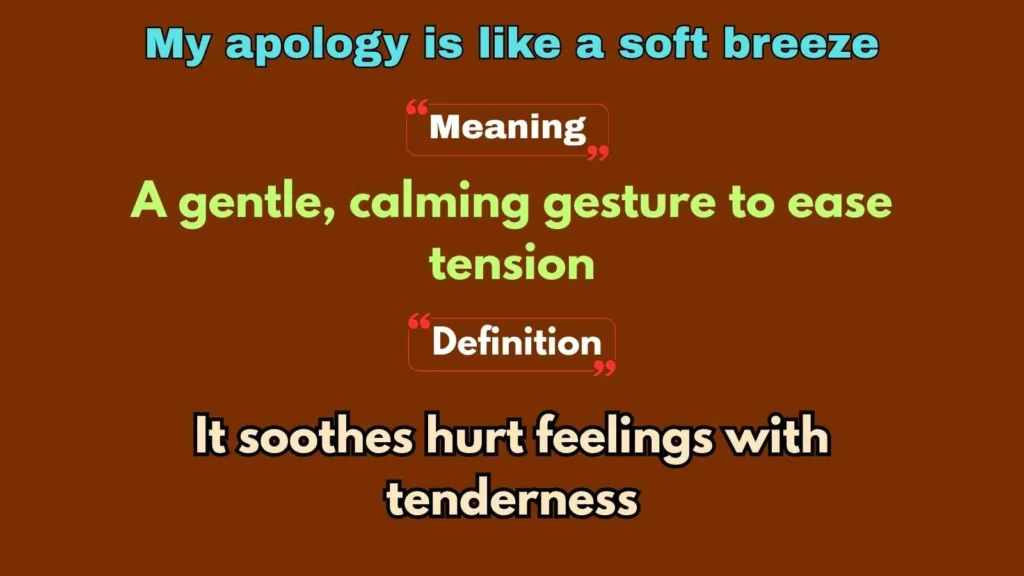
- Meaning: A gentle, calming gesture to ease tension.
- Definition: It soothes hurt feelings with tenderness.
- Example 1: My apology is like a soft breeze, hoping to cool the heat of your anger.
- Example 2: Like a soft breeze after a storm, my sorry aims to bring peace.
Regret feels like a heavy stone
- Meaning: Guilt that burdens the heart.
- Definition: It weighs heavily until forgiveness lifts it.
- Example 1: My regret feels like a heavy stone, dragging my spirit down.
- Example 2: Like a heavy stone in my chest, I’m sorry for what I did.
Saying sorry is like mending a torn cloth
- Meaning: Carefully repairing a damaged relationship.
- Definition: It stitches bonds back together.
- Example 1: Saying sorry is like mending a torn cloth, piecing us back together.
- Example 2: My apology, like mending a torn cloth, hopes to restore our trust.
My remorse is like a fading echo
- Meaning: Lingering guilt seeking closure.
- Definition: It resonates until forgiveness silences it.
- Example 1: My remorse is like a fading echo, calling for your understanding.
- Example 2: Like a fading echo, my apology lingers until you hear it.
An apology is like a warm blanket
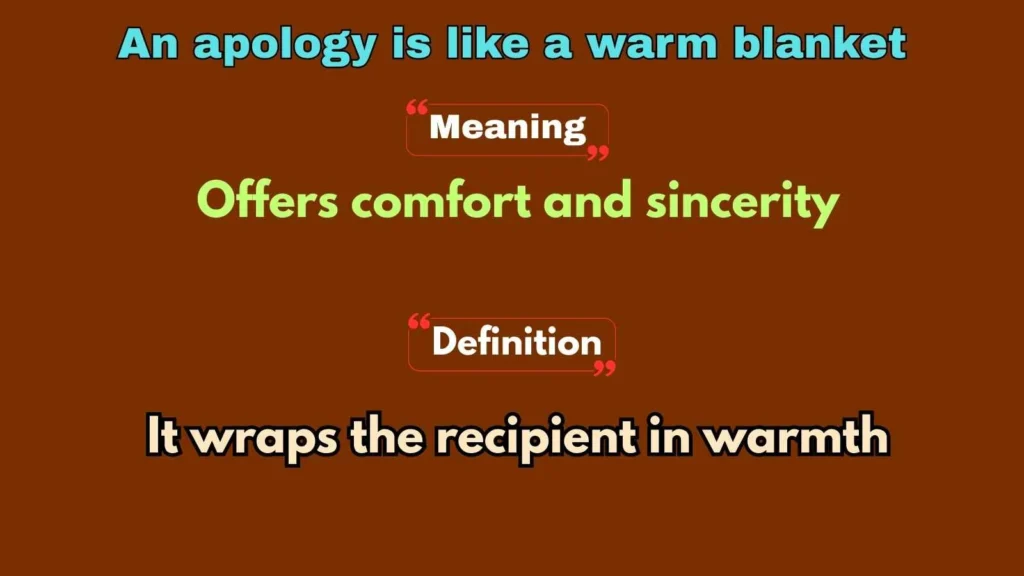
- Meaning: Offers comfort and sincerity.
- Definition: It wraps the recipient in warmth.
- Example 1: My apology is like a warm blanket, hoping to comfort your heart.
- Example 2: Like a warm blanket, my sorry aims to ease your pain.
Guilt is like a stormy sea
- Meaning: Overwhelming and turbulent emotions.
- Definition: It churns with regret until calmed.
- Example 1: My guilt is like a stormy sea, crashing with my mistakes.
- Example 2: Like a stormy sea, my heart begs for your forgiveness.
My sorry is like a blooming flower
- Meaning: A fresh start after regret.
- Definition: It symbolizes hope and renewal.
- Example 1: My sorry is like a blooming flower, offering beauty after pain.
- Example 2: Like a blooming flower, my apology seeks to brighten your day.
Regret is like a locked door
- Meaning: Blocks connection until opened.
- Definition: It isolates until forgiveness unlocks it.
- Example 1: My regret is like a locked door, waiting for your key of forgiveness.
- Example 2: Like a locked door, my guilt keeps me from you until I say sorry.
An apology is like a warm blanket
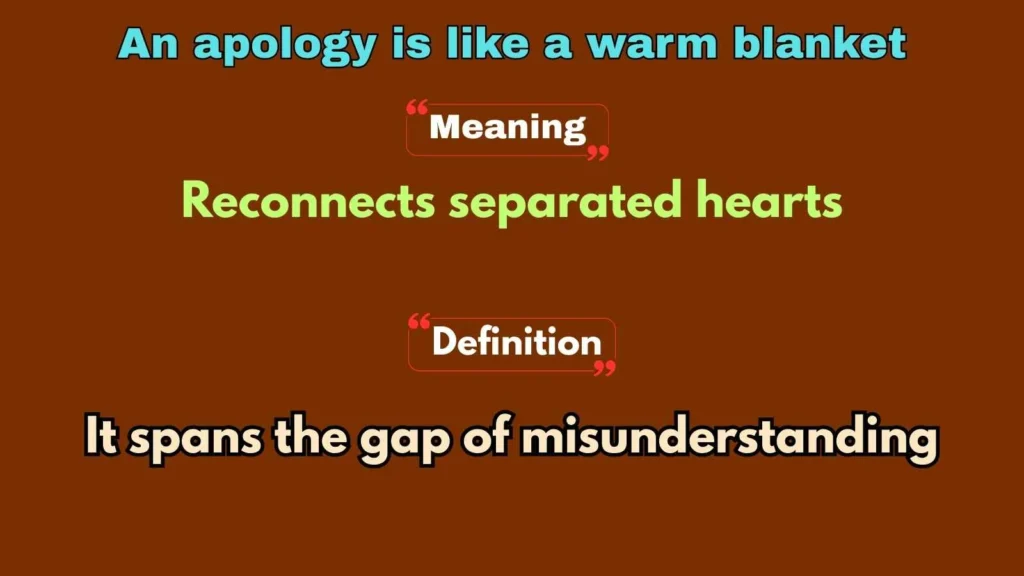
- Meaning: Reconnects separated hearts.
- Definition: It spans the gap of misunderstanding.
- Example 1: My apology is like a bridge over a river, linking us again.
- Example 2: Like a bridge over a river, my sorry aims to bring us closer.
Sorrow is like a wilted rose
- Meaning: Beauty marred by regret.
- Definition: It droops until revived by forgiveness.
- Example 1: My sorrow is like a wilted rose, yearning for your care.
- Example 2: Like a wilted rose, my heart aches until you accept my sorry.
My regret is like a cracked mirror
- Meaning: Reflects a broken self-image.
- Definition: It shows flaws until mended.
- Example 1: My regret is like a cracked mirror, showing my mistakes clearly.
- Example 2: Like a cracked mirror, my apology tries to piece things back.
Saying sorry is like planting a seed
- Meaning: Starts healing with potential growth.
- Definition: It nurtures future trust.
- Example 1: Saying sorry is like planting a seed, hoping for new beginnings.
- Example 2: Like planting a seed, my apology seeks to grow our bond.
Guilt feels like a tangled knot
- Meaning: Complicated emotions needing unraveling.
- Definition: It binds until forgiveness loosens it.
- Example 1: My guilt feels like a tangled knot, tightening with my shame.
- Example 2: Like a tangled knot, my sorry aims to untie our tension.
My apology is like a lighthouse beam
- Meaning: Guides through emotional fog.
- Definition: It offers clarity and hope.
- Example 1: My apology is like a lighthouse beam, cutting through our misunderstanding.
- Example 2: Like a lighthouse beam, my sorry lights the way to peace.
Regret is like a shadow in sunlight
- Meaning: Persistent but fades with time.
- Definition: It lingers until forgiveness brightens.
- Example 1: My regret is like a shadow in sunlight, fading with your kindness.
- Example 2: Like a shadow in sunlight, my guilt dims with your forgiveness.
An apology is like a gentle rain
- Meaning: Cleanses and renews emotions.
- Definition: It washes away hurt.
- Example 1: My apology is like a gentle rain, soothing the pain I caused.
- Example 2: Like a gentle rain, my sorry hopes to refresh our bond.
Sorrow is like a broken melody
- Meaning: Discordant emotions needing harmony.
- Definition: It seeks resolution through forgiveness.
- Example 1: My sorrow is like a broken melody, longing for your harmony.
- Example 2: Like a broken melody, my apology aims to restore our tune.
My sorry is like a mended fence
- Meaning: Restores boundaries and trust.
- Definition: It repairs relational gaps.
- Example 1: My sorry is like a mended fence, rebuilding our connection.
- Example 2: Like a mended fence, my apology strengthens our bond.
Guilt is like a flickering candle
- Meaning: Unsteady and vulnerable emotions.
- Definition: It wavers until steadied by forgiveness.
- Example 1: My guilt is like a flickering candle, dimming without your grace.
- Example 2: Like a flickering candle, my sorry seeks your steady light.
An apology is like a healing balm
- Meaning: Soothes emotional wounds.
- Definition: It comforts and heals.
- Example 1: My apology is like a healing balm, easing the hurt I caused.
- Example 2: Like a healing balm, my sorry aims to mend your heart.
Regret is like a barren field
- Meaning: Emptiness from mistakes.
- Definition: It awaits forgiveness to flourish.
- Example 1: My regret is like a barren field, longing for your renewal.
- Example 2: Like a barren field, my guilt hopes for your forgiving rain.
Saying sorry is like tuning a guitar
- Meaning: Restores harmony to relationships.
- Definition: It aligns emotions.
- Example 1: Saying sorry is like tuning a guitar, bringing us back in harmony.
- Example 2: Like tuning a guitar, my apology seeks to find our rhythm.
My remorse is like a fallen leaf
- Meaning: Fragile and fleeting regret.
- Definition: It drifts until grounded by forgiveness.
- Example 1: My remorse is like a fallen leaf, carried by my shame.
- Example 2: Like a fallen leaf, my sorry seeks your gentle touch.
An apology is like a new dawn
- Meaning: Signals hope and fresh starts.
- Definition: It brings light after darkness.
- Example 1: My apology is like a new dawn, promising a brighter day.
- Example 2: Like a new dawn, my sorry hopes to start anew.
Guilt is like a tangled vine
- Meaning: Overgrowth of regret.
- Definition: It chokes until pruned by forgiveness.
- Example 1: My guilt is like a tangled vine, wrapping around my heart.
- Example 2: Like a tangled vine, my apology seeks to clear the way.
My sorry is like a quiet stream
- Meaning: Gentle and steady remorse.
- Definition: It flows to soothe hurt.
- Example 1: My sorry is like a quiet stream, calming the hurt I caused.
- Example 2: Like a quiet stream, my apology runs deep with sincerity.
Regret is like a faded painting
- Meaning: Dimmed beauty from mistakes.
- Definition: It awaits restoration.
- Example 1: My regret is like a faded painting, longing for your colors.
- Example 2: Like a faded painting, my guilt seeks your forgiving touch.
Saying sorry is like rebuilding a wall
- Meaning: Restores structure to relationships.
- Definition: It strengthens weakened bonds.
- Example 1: Saying sorry is like rebuilding a wall, fortifying our trust.
- Example 2: Like rebuilding a wall, my apology aims to stand strong.
My apology is like a handwritten note
- Meaning: Personal and heartfelt.
- Definition: It conveys sincerity directly.
- Example 1: My apology is like a handwritten note, crafted just for you.
- Example 2: Like a handwritten note, my sorry carries my heart’s truth.
Sorrow is like a distant star
- Meaning: Remote but visible regret.
- Definition: It shines until acknowledged.
- Example 1: My sorrow is like a distant star, glowing with my regret.
- Example 2: Like a distant star, my apology hopes to reach your heart.
Crafting Words with Heart: Using Similes in Creative Writing
Similes for apologies can elevate your creative work, adding depth and emotion. Here’s how to weave them into various forms:
- Poems: Use similes to paint vivid emotional landscapes. For example, “My regret is like a cracked mirror” can anchor a poem about self-reflection, creating a striking image for readers.
- Stories: Incorporate similes in character dialogue or narration to show remorse authentically. A character saying, “My sorry is like a quiet stream” can reveal their introspective nature.
- Songs: Lyrics with similes like “An apology is like a new dawn” can resonate with listeners, evoking hope and renewal in a chorus.
- Essays: In reflective or persuasive essays, similes clarify complex emotions. Use “Guilt is like a stormy sea” to discuss the weight of mistakes in personal growth narratives.
Tips for Use:
- Match the simile’s tone to the context—gentle similes for soft apologies, heavy ones for deep regret.
- Avoid overuse to maintain impact; one strong simile per paragraph is enough.
- Pair similes with sensory details for vividness, like describing the “stormy sea” with crashing waves.
FAQs
### Why use similes in apologies?
Similes make apologies vivid and relatable, helping express sincere emotions clearly.
### How do similes enhance emotional expression?
They create imagery that connects abstract feelings like guilt to tangible objects, making apologies heartfelt.
### Can similes be used in formal apologies?
Yes, subtle similes like “My apology is like a mended fence” can add sincerity without being overly casual.
### What makes a good apology simile?
A good simile is relatable, vivid, and matches the apology’s emotional tone.
### How can I create my own apology similes?
Compare regret to familiar objects or experiences, like nature or everyday items, to craft personal similes.
Conclusion
Apologies can be hard, but similes transform them into powerful, heartfelt expressions. From gentle breezes to mended fences, these vivid comparisons help convey remorse with clarity and emotion.
Whether in poetry, stories, or personal notes, they bridge gaps and heal hearts. Embrace these creative tools to make your apologies resonate, fostering forgiveness and connection in 2025 and beyond.

I’m a writer at SimileSpot who loves turning ideas into simple and creative similes. My goal is to help readers understand comparisons easily and enjoy learning through clear, fun examples. I believe similes make language more alive and meaningful.