
Similes paint vivid pictures with words, comparing one thing to another using “like” or “as” to spark imagination. When it comes to capturing the raw emotion of fear, they bring trembling moments to life, making readers feel the pulse of anxiety or dread.
Fear is universal, yet so personal—its shades range from quiet unease to heart-pounding terror. Exploring similes for being afraid unveils creative ways to express this powerful feeling, whether in poetry, stories, or everyday conversations.
This article offers a treasure trove of comparisons to inspire your writing and deepen your emotional palette. Keep reading to discover fresh, evocative phrases that will make your descriptions leap off the page and resonate with readers in 2025.
Quick Definition of a Simile
A simile is a figure of speech that compares two different things using “like” or “as.” It helps create vivid imagery, making emotions like fear more relatable and engaging.
Table of 5 Quick Similes for Afraid
| Simile | Meaning | Example Sentence |
|---|---|---|
| As scared as a mouse in a cat’s shadow | Feeling small and vulnerable, expecting danger | She stood frozen, as scared as a mouse in a cat’s shadow, hearing footsteps in the dark. |
| Like a deer caught in headlights | Paralyzed by sudden fear, unable to act | His eyes widened, like a deer caught in headlights, as the car sped toward him. |
| Shaking like a leaf in a storm | Trembling uncontrollably from fear | Her hands were shaking like a leaf in a storm as she faced the audience. |
| As jittery as a bug on a hot skillet | Restless and nervous, unable to stay still | He paced the room, as jittery as a bug on a hot skillet, awaiting the results. |
| Like a fish out of water | Out of place and panicked | She felt like a fish out of water, gasping for calm in the chaotic crowd. |
As scared as a mouse in a cat’s shadow
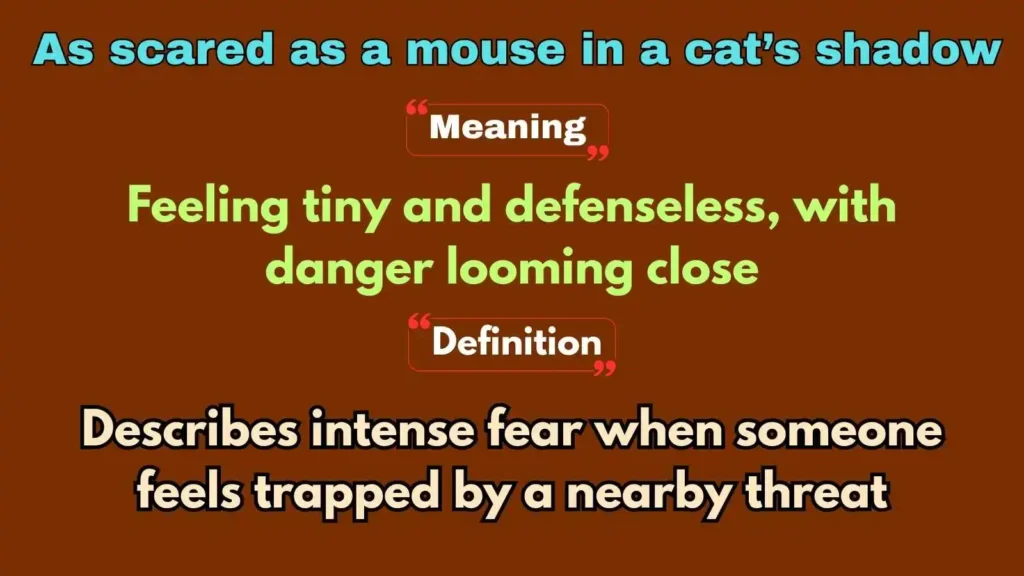
Meaning: Feeling tiny and defenseless, with danger looming close.
Definition: Describes intense fear when someone feels trapped by a nearby threat.
- Example 1: Her heart raced, as scared as a mouse in a cat’s shadow, when she heard the creak of the floorboards.
- Example 2: He stood still, as scared as a mouse in a cat’s shadow, watching the stranger approach.
Trembling like a leaf in a storm
Meaning: Shaking uncontrollably due to overwhelming fear.
Definition: Captures physical tremors caused by intense anxiety or dread.
- Example 1: Her knees buckled, trembling like a leaf in a storm, as the thunder roared outside.
- Example 2: He spoke, trembling like a leaf in a storm, unsure of the crowd’s reaction.
Like a deer caught in headlights
Meaning: Frozen in fear, unable to move or think clearly.
Definition: Illustrates paralysis in the face of sudden, overwhelming danger.
- Example 1: She stood like a deer caught in headlights, staring at the unexpected visitor.
- Example 2: His mind blanked, like a deer caught in headlights, as the teacher called his name.
As jittery as a bug on a hot skillet
Meaning: Nervously restless, unable to stay calm or still.
Definition: Conveys anxious energy and fidgeting under pressure.
- Example 1: Waiting for the interview, he was as jittery as a bug on a hot skillet, tapping his foot endlessly.
- Example 2: She felt as jittery as a bug on a hot skillet, dreading the doctor’s diagnosis.
Like a fish out of water
Meaning: Feeling panicked and out of place in an unfamiliar situation.
Definition: Highlights discomfort and fear in an alien environment.
- Example 1: At the formal gala, he floundered like a fish out of water, unsure of the etiquette.
- Example 2: She gasped like a fish out of water, lost in the bustling city streets.
Frozen like a statue in a haunted house
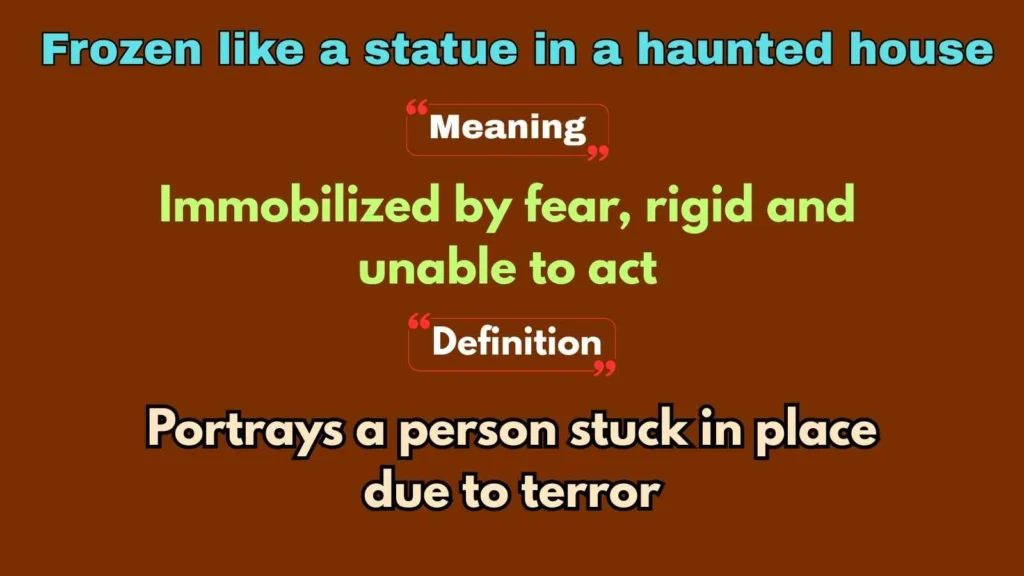
Meaning: Immobilized by fear, rigid and unable to act.
Definition: Portrays a person stuck in place due to terror.
- Example 1: He stood frozen like a statue in a haunted house, hearing whispers in the dark.
- Example 2: Her body was frozen like a statue in a haunted house as the eerie noise grew louder.
As nervous as a cat in a room full of rocking chairs
Meaning: On edge, expecting harm at any moment.
Definition: Describes heightened anxiety in a tense, unpredictable setting.
- Example 1: She paced, as nervous as a cat in a room full of rocking chairs, awaiting the verdict.
- Example 2: He felt as nervous as a cat in a room full of rocking chairs during the stormy night.
Shivering like a wet dog in the cold
Meaning: Trembling from fear, with a sense of vulnerability.
Definition: Evokes the image of uncontrollable shaking in a scary situation.
- Example 1: Her voice wavered, shivering like a wet dog in the cold, as she spoke to the crowd.
- Example 2: He stood shivering like a wet dog in the cold, facing the dark alley alone.
Like a rabbit in a fox’s den
Meaning: Trapped and terrified, surrounded by danger.
Definition: Conveys fear in a situation where escape seems impossible.
- Example 1: She felt like a rabbit in a fox’s den, cornered by the aggressive salesman.
- Example 2: His heart pounded like a rabbit in a fox’s den as the argument escalated.
As skittish as a colt on a windy day
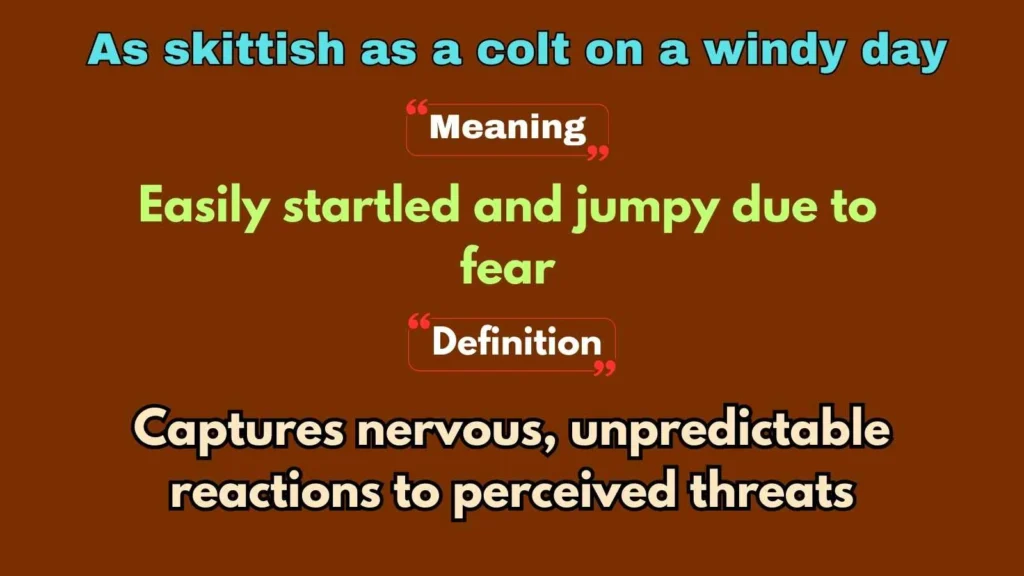
Meaning: Easily startled and jumpy due to fear.
Definition: Captures nervous, unpredictable reactions to perceived threats.
- Example 1: She was as skittish as a colt on a windy day, flinching at every sound.
- Example 2: He moved as skittish as a colt on a windy day, wary of the stranger’s gaze.
Quaking like a building in an earthquake
Meaning: Shaking intensely from fear, as if the ground is unsteady.
Definition: Describes powerful, uncontrollable trembling in a frightening moment.
- Example 1: Her legs were quaking like a building in an earthquake as she faced the judge.
- Example 2: He stood quaking like a building in an earthquake, hearing the siren’s wail.
Like a bird trapped in a cage
Meaning: Feeling confined and panicked, desperate for freedom.
Definition: Portrays fear mixed with a sense of being trapped.
- Example 1: She paced like a bird trapped in a cage, anxious about the locked door.
- Example 2: His thoughts raced like a bird trapped in a cage during the tense meeting.
As timid as a turtle in its shell
Meaning: Withdrawn and hesitant, retreating from fear.
Definition: Suggests shrinking back to avoid danger or attention.
- Example 1: He spoke as timid as a turtle in its shell, avoiding eye contact.
- Example 2: She acted as timid as a turtle in its shell, dreading the confrontation.
Shrinking like a shadow at noon
Meaning: Becoming smaller or less confident due to fear.
Definition: Illustrates diminishing presence in a scary situation.
- Example 1: Her voice was shrinking like a shadow at noon as the boss questioned her.
- Example 2: He felt himself shrinking like a shadow at noon under the crowd’s scrutiny.
Like a moth near a flame
Meaning: Drawn to danger yet terrified of its consequences.
Definition: Captures the conflict of fear and fascination with risk.
- Example 1: She hesitated like a moth near a flame, tempted but scared to speak up.
- Example 2: His heart raced like a moth near a flame, drawn to the risky adventure.
As pale as a ghost in moonlight
Meaning: Visibly drained of color due to intense fear.
Definition: Highlights the physical effect of fear on appearance.
- Example 1: Her face was as pale as a ghost in moonlight when she saw the figure.
- Example 2: He turned as pale as a ghost in moonlight, hearing the eerie howl.
Trembling like a tuning fork
Meaning: Vibrating with nervous energy from fear.
Definition: Suggests a subtle but constant shaking under stress.
- Example 1: His hands were trembling like a tuning fork as he opened the letter.
- Example 2: She stood trembling like a tuning fork, facing the roaring crowd.
Like a sailor lost in a storm
Meaning: Overwhelmed and frightened by chaotic circumstances.
Definition: Conveys fear in a disorienting, uncontrollable situation.
- Example 1: He felt like a sailor lost in a storm, navigating the heated debate.
- Example 2: She wandered like a sailor lost in a storm, confused by the new city.
As frightened as a child in the dark
Meaning: Experiencing raw, primal fear of the unknown.
Definition: Evokes innocent, intense terror in unfamiliar settings.
- Example 1: Her eyes widened, as frightened as a child in the dark, hearing the strange noise.
- Example 2: He clung to the blanket, as frightened as a child in the dark, alone in the house.
Shaking like a feather in the wind
Meaning: Trembling lightly but visibly due to fear.
Definition: Portrays delicate, uncontrollable shaking in a scary moment.
- Example 1: Her voice was shaking like a feather in the wind as she confessed.
- Example 2: He stood shaking like a feather in the wind, facing the steep cliff.
Like a lamb before the slaughter
Meaning: Helpless and terrified, facing inevitable danger.
Definition: Suggests vulnerability and dread in a dire situation.
- Example 1: She walked like a lamb before the slaughter, entering the principal’s office.
- Example 2: His heart sank like a lamb before the slaughter, awaiting the bad news.
As edgy as a knife’s blade
Meaning: Extremely tense and nervous, ready to snap.
Definition: Captures sharp, intense anxiety in a fearful moment.
- Example 1: He was as edgy as a knife’s blade, waiting for the test results.
- Example 2: Her voice sounded as edgy as a knife’s blade during the heated argument.
Quivering like a bowstring
Meaning: Taut and trembling with nervous energy.
Definition: Describes fear as a tightly wound, vibrating tension.
- Example 1: Her hands were quivering like a bow弦 as she faced the challenge.
- Example 2: He stood quivering like a bowstring, dreading the final score.
Like a sparrow under a hawk’s gaze
Meaning: Watched and terrified, expecting an attack.
Definition: Portrays fear under intense scrutiny or threat.
- Example 1: She felt like a sparrow under a hawk’s gaze, meeting the stern teacher.
- Example 2: His heart raced like a sparrow under a hawk’s gaze as the boss stared.
As anxious as a hen in a fox’s lair
Meaning: Nervous and vulnerable in a dangerous environment.
Definition: Suggests fear in a place where danger feels imminent.
- Example 1: She paced as anxious as a hen in a fox’s lair, waiting in the eerie silence.
- Example 2: He felt as anxious as a hen in a fox’s lair, stuck in the crowded room.
Trembling like a flame in the wind
Meaning: Shaking unsteadily, vulnerable to being extinguished by fear.
Definition: Evokes a fragile, flickering reaction to terror.
- Example 1: Her voice was trembling like a flame in the wind as she spoke up.
- Example 2: He stood trembling like a flame in the wind, facing the unknown.
Like a leaf before a gale
Meaning: Helpless and tossed about by overwhelming fear.
Definition: Conveys being swept away by powerful, scary forces.
- Example 1: She felt like a leaf before a gale, caught in the chaotic protest.
- Example 2: His thoughts spun like a leaf before a gale, facing the sudden crisis.
As jumpy as a grasshopper
Meaning: Quick to react and easily startled by fear.
Definition: Describes nervous, twitchy behavior under stress.
- Example 1: He was as jumpy as a grasshopper, flinching at every noise.
- Example 2: Her eyes darted, as jumpy as a grasshopper, in the dark forest.
Shuddering like a boat in rough seas
Meaning: Shaking with fear, unsteady in turbulent times.
Definition: Portrays instability and trembling in a scary situation.
- Example 1: Her body was shuddering like a boat in rough seas as the storm raged.
- Example 2: He spoke, shuddering like a boat in rough seas, facing the angry crowd.
Like a mouse before a snake
Meaning: Paralyzed by fear, facing a cunning predator.
Definition: Suggests terror in the presence of a sly, imminent threat.
- Example 1: She stood like a mouse before a snake, staring at the shadowy figure.
- Example 2: His heart pounded like a mouse before a snake, hearing the eerie whisper.
Spark Your Words: Using Similes for Fear in Creative Writing
Similes for being afraid add depth and emotion to your creative projects. Here’s how to weave them into different forms of writing:
- Poetry: Use similes like “trembling like a leaf in a storm” to create vivid imagery. Place them in short lines for impact, evoking fear’s raw intensity. For example, “Her heart, quaking like a building in an earthquake, / Beats against the cage of night.”
- Stories: Integrate similes to show characters’ emotions without telling. Instead of saying “she was scared,” write, “She stood like a deer caught in headlights, eyes wide.” This paints a stronger picture.
- Songs: Pair similes with rhythm for emotional resonance. A line like “I’m shaking like a feather in the wind” can fit a haunting melody, conveying fear in lyrics.
- Essays: Use similes sparingly to emphasize key points. For instance, in a personal narrative, “I felt as timid as a turtle in its shell” can vividly describe anxiety during a pivotal moment.
- Mix and Match: Combine similes for variety. A story might describe a character “as nervous as a cat in a room full of rocking chairs” early on, then “like a lamb before the slaughter” as tension peaks.
Experiment with these comparisons to match your tone, whether it’s subtle unease or outright terror. Keep context in mind—choose similes that fit the setting and character for authenticity.
FAQs
### What is a simile for being scared?
A simile for being scared compares fear to something vivid using “like” or “as,” such as “as scared as a mouse in a cat’s shadow.” It creates a relatable image of vulnerability.
### How do similes enhance writing about fear?
Similes make fear tangible by linking it to familiar images, like “shaking like a leaf in a storm,” helping readers feel the emotion more deeply.
### Can I create my own similes for afraid?
Yes, combine familiar objects with fear’s traits, like “jumpy as a frog on a hot rock,” ensuring the comparison is clear and evocative.
### Why use similes instead of just saying “afraid”?
Similes add color and specificity, making descriptions like “frozen like a statue in a haunted house” more engaging than the plain word “afraid.”
### Are similes for afraid universal across cultures?
While fear is universal, similes may vary. Animals like mice or deer are common in English similes, but other cultures might use different imagery, like local animals or myths.
Conclusion
Similes transform the abstract feeling of fear into vivid, relatable images, enriching your writing with emotional depth. From trembling leaves to frozen deer, these comparisons capture the heart of anxiety and dread.
Writers of all kinds—poets, storytellers, or essayists—can use these phrases to craft compelling narratives that resonate in 2025.
Embrace these similes, experiment with your own, and let your words pulse with the raw energy of fear, drawing readers into your world.

I am a passionate writer at SimileSpot who loves playing with words. I create clear and creative similes to make ideas easy to understand and fun to read.